Keep Your Outbuildings Functional Year-Round
Pole Barn & Metal Buildings in Norwich for property owners dealing with condensation, temperature swings, and moisture damage in uninsulated structures
Supreme Seal Spray Foam provides pole barn and metal building insulation in New York and surrounding areas. Closed-cell spray foam insulation is the most effective solution for improving building performance.
Spray foam insulation improves temperature regulation and adds structural strength to pole barns and metal buildings. It is ideal for spaces that need to maintain consistent conditions, including Commercial Insulation, garages, workshops, equipment storage areas, and Agricultural Insulation - agricultural buildings housing animals or feed. We handle everything from single-bay garages and workshops to commercial metal buildings of 12,000 square feet and more.
Supreme Seal Spray Foam works with property owners to determine the right insulation thickness and application method based on how the building is used. If you want to make your pole barn or metal building more efficient, protect what is inside, and extend its usability year-round, request a free estimate to discuss your project and scheduling.
What Changes After Insulation
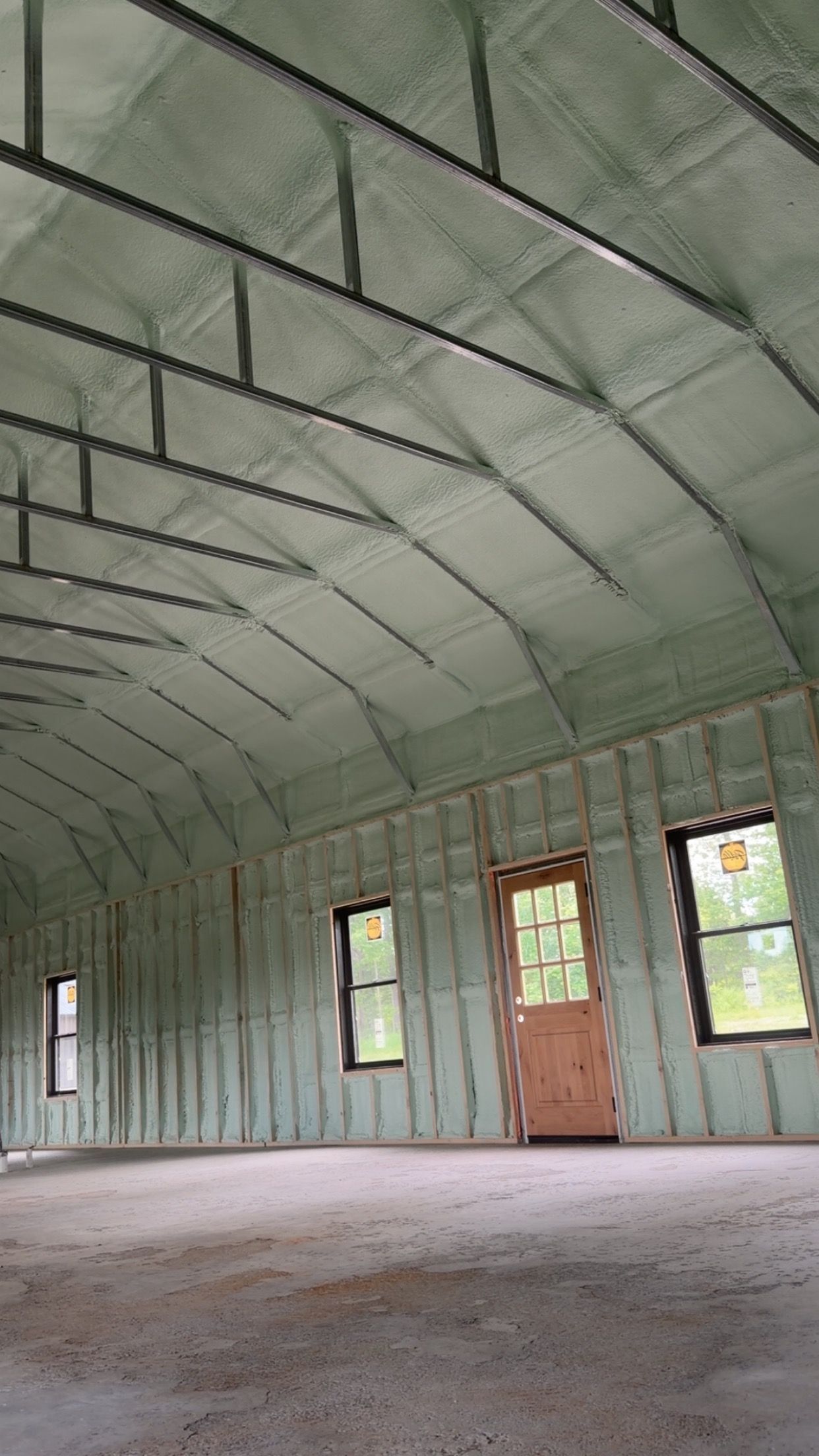
Once installed, closed-cell spray foam insulation immediately improves building performance, helping protect equipment, materials, and structural components from outside elements. Interior temperatures become more stable, making the space more comfortable for daily use and reducing the workload on heating or cooling systems. Each project is tailored to the building's purpose, whether it is a workshop, storage facility, or agricultural structure requiring consistent climate control. We insulate both existing buildings and new builds, and insulating at the construction stage delivers the best long-term result.
Spray foam insulation is especially effective for pole barns because it seals irregular framing and metal panel gaps that traditional insulation cannot address. Where the foam will remain exposed as the finished wall, we complete the assembly with Intumescent Coatings, the fire-protective finish that brings exposed foam up to code and brightens the interior at the same time. . While this service focuses on insulation and air sealing, it does not include structural repairs, electrical work, or ventilation system installation. Any existing damage should be resolved prior to application to ensure proper adhesion and long-term performance. For many uninsulated buildings across New York and surrounding areas, adding spray foam insulation significantly improves usability, efficiency, and overall durability.
Questions About Insulating Metal and Pole Barn Structures
Property owners want to understand how insulation will perform in unheated or partially heated buildings and what to expect during and after installation.
Why does condensation form in uninsulated metal buildings?
Warm, moist air inside the building contacts cold metal surfaces, causing water to condense and drip or freeze depending on outdoor temperature.
How does closed-cell spray foam prevent condensation?
It creates a vapor barrier and thermal break that keeps interior surfaces above the dew point, eliminating the temperature difference that causes moisture to form.
When is the best time to insulate a pole barn in Norwich?
Late spring through early fall offers the best conditions for foam application, though winter work is possible if the building can be heated temporarily during curing.
What thickness of foam is needed for a metal building?
Most applications use two to three inches of closed-cell foam to achieve adequate R-value and vapor control, though specific needs vary by use and climate exposure.
How does insulation affect heating costs in a workshop or garage?
Insulated buildings require far less energy to heat and hold temperature longer, making portable heaters and small HVAC units much more effective.
Contact Supreme Seal Spray Foam for a free estimate tailored to your building type, size, and intended use, and discuss how insulation can extend the life and functionality of your structure.